
As land, construction, and labor costs continue to rise, high-density storage systems have become a strategic priority in warehouse design. Whether upgrading an existing pallet warehouse or building a new distribution center, selecting the right system directly impacts:
- ✔ Space utilization (floor & cubic capacity)
- ✔ Cost per pallet position
- ✔ Throughput performance
- ✔ Long-term return on investment (ROI)
This guide compares major high-density solutions—from Push Back to ASRS—so you can make a data-driven decision.
1. What Is a High-Density Storage System?
High-density storage systems are designed to:
Reduce aisle space and maximize pallet positions per square meter (or square foot).
Traditional selective racking typically offers 40–50% space utilization, while high-density systems can achieve 60–95%, depending on the technology used.
2. Comparison of Major High-Density Storage Systems
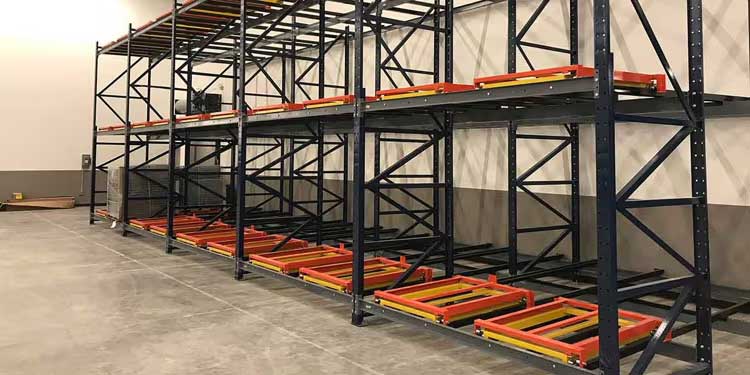
1️⃣ Push Back Racking
How It Works
Pallets are placed on nested carts mounted on inclined rails. Each new pallet pushes the previous one backward. Inventory follows a LIFO (Last-In, First-Out) flow.
Space Utilization: Approximately 60–75%
Advantages
- ✔ Higher density than selective racking
- ✔ Safer than drive-in (forklift stays in aisle)
- ✔ Faster loading/unloading
- ✔ Suitable for medium SKU variety
Limitations
- ✖ LIFO only
- ✖ Higher structural cost than selective racking
Best For
- Medium-volume SKUs
- Retail distribution centers
- Moderate turnover operations
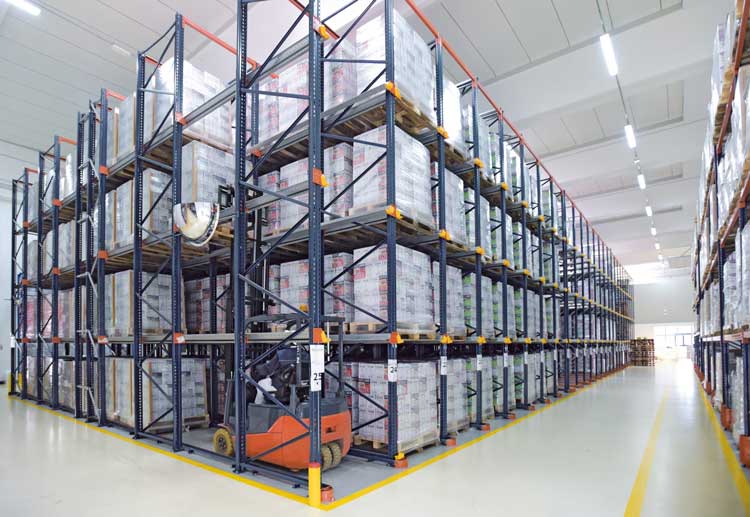
2️⃣ Drive-in Racking
How It Works
Forklifts enter deep storage lanes and place pallets on support rails. Typically operates under LIFO.
Space Utilization: Approximately 70–85%
Advantages
- ✔ Lower cost per pallet position
- ✔ Very high storage density
- ✔ Widely used in cold storage
Limitations
- ✖ Limited SKU variety
- ✖ Slower picking
- ✖ Higher risk of rack damage
Best For
- ✔ Food & beverage storage
- ✔ Cold chain warehouses
- ✔ Bulk manufacturing inventory
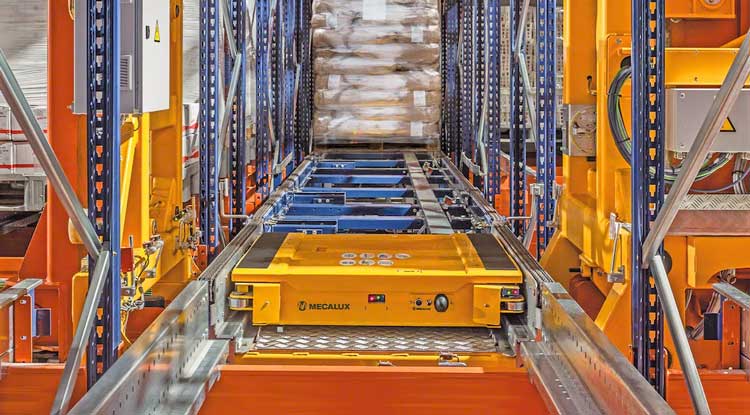
How It Works
A remote-controlled shuttle automatically moves pallets inside deep lanes, eliminating forklift entry.
Space Utilization: Approximately 75–90%
Advantages
- ✔ Improved safety (no forklift inside lanes)
- ✔ Higher throughput than drive-in
- ✔ Supports FIFO or LIFO
- ✔ Ideal for deep-lane storage
Limitations
- ✖ Higher equipment investment
- ✖ Requires battery management & maintenance
Best For
- ✔ Large logistics centers
- ✔ High-turnover cold storage
- ✔ Operations seeking automation without full ASRS investment
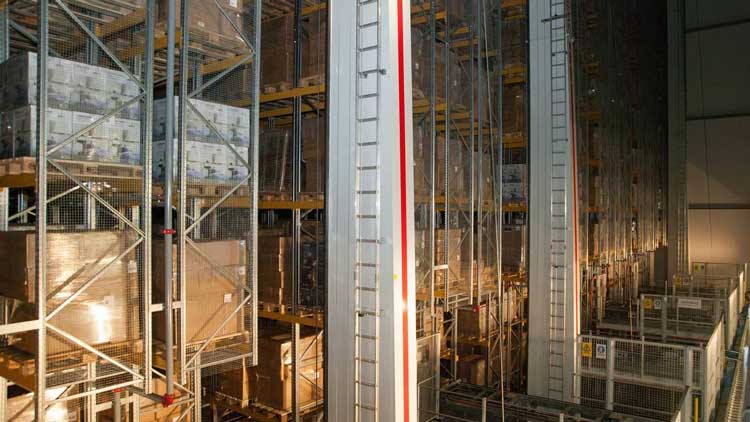
4️⃣ ASRS (Automated Storage and Retrieval System)
How It Works
Computer-controlled stacker cranes, conveyors, and WMS software automatically store and retrieve pallets in high-bay racking systems.
Space Utilization: Up to 85–95%
Advantages
- ✔ Minimal labor cost
- ✔ Extremely high vertical density (up to 30m+ high)
- ✔ Precise inventory control
- ✔ Improved safety and accuracy
Limitations
- ✖ High initial capital investment
- ✖ Longer implementation timeline
- ✖ Requires professional technical support
Best For
- ✔ Large-scale e-commerce hubs
- ✔ Smart manufacturing facilities
- ✔ Pharmaceutical & high-regulation industries
3. Space Utilization & ROI Comparison
| System Type | Space Utilization | Initial Investment | Labor Cost | SKU Flexibility | Typical ROI |
|---|---|---|---|---|---|
| Push Back | 60–75% | Medium | Medium | Moderate | 2–4 years |
| Drive-in | 70–85% | Low–Medium | Medium | Low | 1–3 years |
| Shuttle | 75–90% | Medium–High | Low | Low–Moderate | 3–5 years |
| ASRS | 85–95% | High | Very Low | High | 5–8 years |
4. How to Choose: Decision Framework
1️⃣ SKU Structure
- Many SKUs → Avoid drive-in
- Few SKUs, high volume → High-density systems preferred
2️⃣ Turnover Rate
- High throughput → Shuttle or ASRS
- Bulk reserve storage → Drive-in
3️⃣ Land & Cold Storage Cost
In cold storage, every additional cubic meter significantly increases energy costs. Higher density often delivers faster ROI.
4️⃣ Capital Budget
- Limited budget → Drive-in
- Mid-range budget → Push Back or Shuttle
- Long-term automation strategy → ASRS
5. Typical Upgrade Path
Many growing businesses evolve as follows:
Selective Racking → Drive-in → Shuttle → ASRS
As order complexity and labor costs increase, automation becomes more financially justified.
6. Final Conclusion
- Choose Drive-in for low-cost, bulk density
- Choose Push Back for balanced density and efficiency
- Choose Shuttle for higher safety and throughput
- Choose ASRS for long-term automation and maximum cubic utilization
Ultimately, your decision should be based on:
SKU profile × Throughput demand × Budget × Labor cost × Future expansion strategy
High-density storage is not merely a racking decision—it is a long-term infrastructure investment in supply chain performance.
Post time: Feb-24-2026